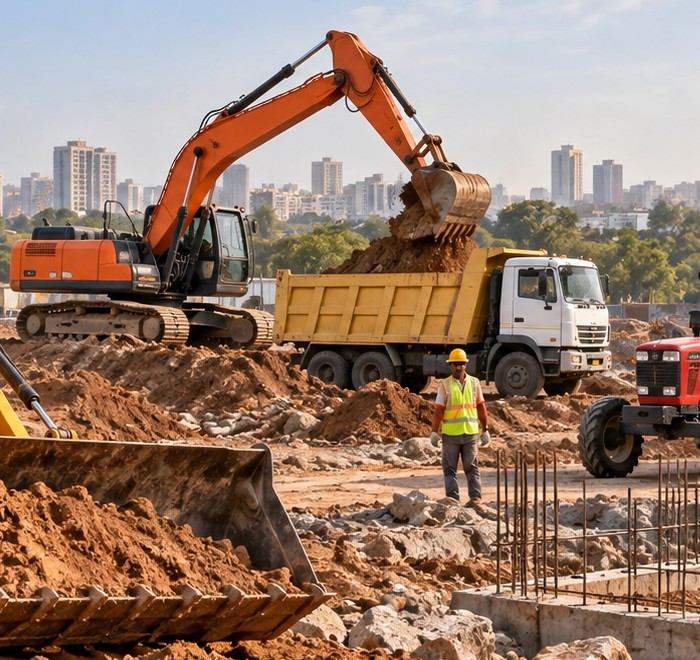
JCB and excavators are both useful on construction sites, but they solve different problems. Choosing the right machine starts with the actual work: depth, reach, access, digging conditions, loading, grading and whether the machine needs to move around a compact site.
JCB or excavator: the practical difference
A JCB backhoe loader combines a front loader with a rear digging arm, making it useful for jobs that require digging plus loading or handling material around the site.
A tracked excavator is built primarily around digging, lifting, loading and working with a longer reach. It is often selected when excavation depth, reach, production or demolition capability is more important.
When a JCB can make sense
- General site preparation
- Smaller foundation excavation
- Loading and shifting loose material
- Site cleaning and clearing
- Roadside and utility earthwork
- Jobs where mobility around the site matters
When an excavator can make sense
- Deep excavation
- Larger foundation or basement work
- High-volume earthmoving
- Demolition with suitable attachments
- Longer reach requirements
- Heavy loading into tippers
- River, canal or drainage-related excavation where suitable equipment is available
Choosing based on the site, not just the machine name
Two projects with the same headline—“excavation”—can need very different equipment. A narrow urban site with limited access may require a different approach from a large land-development project.
Tell us the site location, excavation depth, approximate quantity, access conditions and purpose of the work. We can then discuss whether a JCB, excavator or combination of machines is appropriate.
Using JCB + excavator + tipper together
Larger projects often work better as a coordinated operation: excavator or JCB performs the digging, a tipper handles soil or rubble transportation, and skilled earthwork labour supports trimming, levelling and finishing.
Why project context matters in Bengaluru
Bengaluru construction sites can range from compact residential plots to commercial developments, roadwork, land development and larger projects. Access, surrounding structures, soil movement and traffic conditions can change the practical equipment requirement. Sharing the site location and work details early helps the team discuss a realistic equipment plan.
Frequently asked questions
Which is better for deep excavation?
For deeper or higher-volume excavation, an excavator is often considered because of its digging depth and reach. The actual machine should still be selected based on the site.
Can a JCB be used for roadwork?
Yes. JCBs can support site preparation, material handling, grading and related roadwork activities depending on the scope.
Can you recommend the machine after seeing the site?
Yes. Sharing site photos, location and work details can help the team understand the requirement before confirming equipment.
Need equipment or earthmoving support in Bengaluru?
Tell NHEarthMovers what the site needs, where it is located and when you want to start.